28.07.26
Learning from London’s Buildings: Summer Visits Across the Capital
As summer gets underway, members of the Dannatt Johnson Architects team have taken the opportunity to step away from the drawing board and explore a number of remarkable places across London. From major cultural projects under construction to temporary architecture and local maritime heritage, these visits offered valuable insights into design, conservation and the stories that shape our built environment.
Looking ahead to the New London Museum
We were delighted to join a hard hat tour of the new London Museum at Smithfield, where work continues on one of the UK’s most significant cultural projects. Although we are unable to share photographs from the visit, it was a privilege to see the progress being made behind the scenes and to hear directly from the client, architect and contractor teams about the vision for the museum. Learning more about the layered history of the Smithfield site, alongside the ambitious programme of adaptation and new intervention, reinforced the importance of balancing conservation with contemporary public use. We look forward to seeing the museum open its doors later this year and experiencing the completed transformation.
Exploring the 2026 Serpentine Pavilion
We were also pleased to accept an invitation from Wienerberger to visit the 2026 Serpentine Pavilion, a serpentine, designed by Mexico City-based LANZA atelier. Marking the twenty-fifth Serpentine Pavilion commission, the design takes inspiration from the traditional English crinkle-crankle, or serpentine, wall, using its undulating geometry to create both structural efficiency and richly varied spatial experience. Constructed predominantly from brick, the pavilion establishes a thoughtful dialogue with the adjacent Serpentine South Gallery while demonstrating how a familiar material can be reinterpreted in a contemporary architectural language.
The visit provided an excellent opportunity to reflect on how architects respond to an open design brief, and how materiality, structure and landscape can work together to create an engaging public space. It also prompted interesting discussions about permanence and temporality in architecture, and the ways in which a temporary intervention can make a lasting contribution to architectural discourse.
Discovering the Golden Hinde
Closer to home, members of the practice joined a private tour of the Golden Hinde, organised by Better Bankside. Situated just a short walk from our office, the Golden Hinde is a familiar local landmark, but the tour offered a fascinating insight into both Sir Francis Drake’s original sixteenth-century vessel and the story behind the faithful modern reconstruction that now occupies the site. The visit also provided an opportunity to meet fellow Better Bankside members and strengthen connections within our local community. As architects working in Southwark and across London, understanding the history and character of the places around us is an important part of our work, and these opportunities to engage with our local context are always greatly appreciated.
Staying Curious
Whether exploring a nationally significant museum before completion, experiencing one of the world’s best-known annual architectural commissions, or rediscovering a local historic landmark, each visit offered a reminder that learning extends well beyond the studio. Engaging directly with buildings, places and the people behind them continues to inform our approach to design, conservation and the stewardship of historic environments.
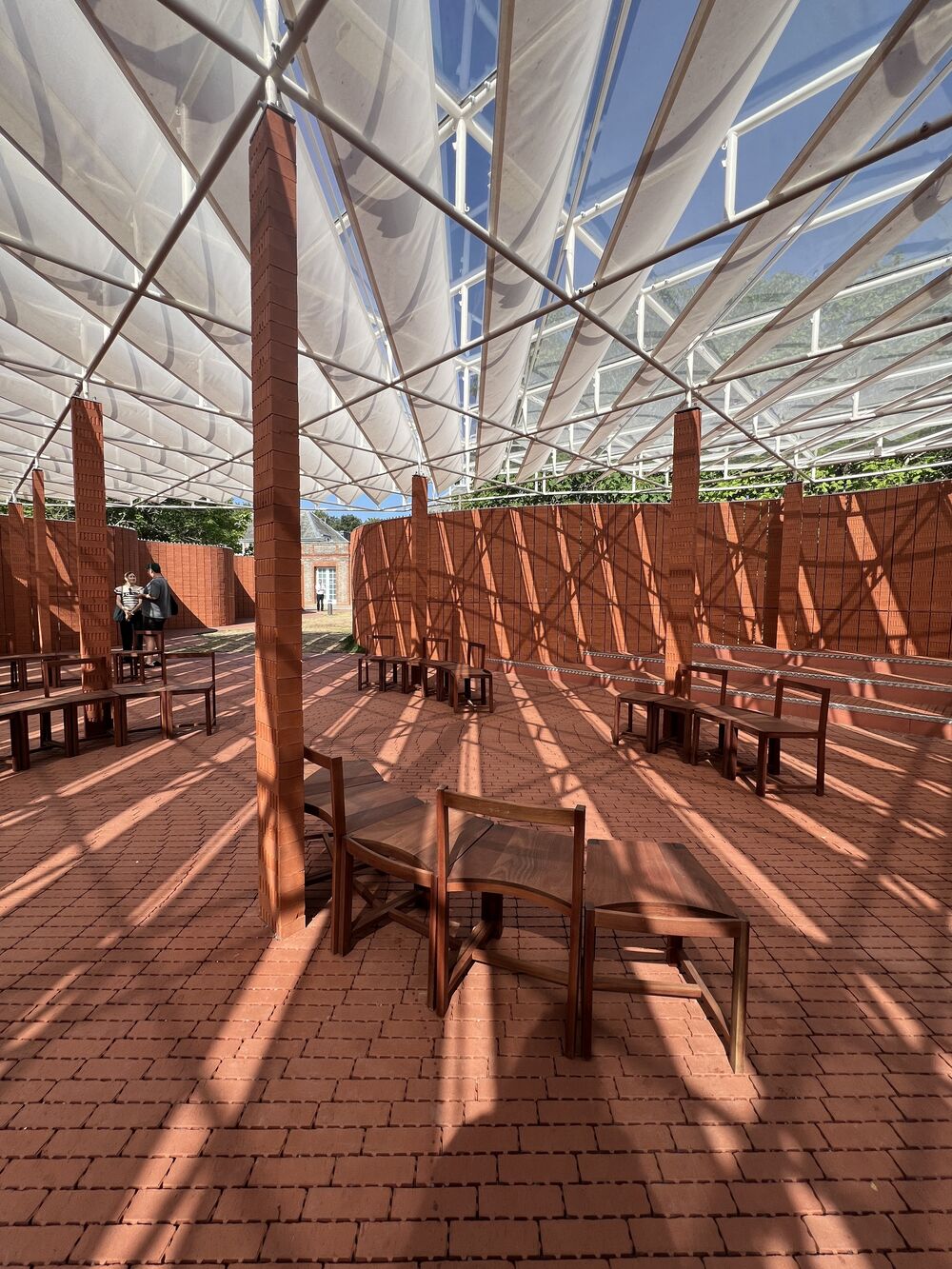
Internal view of the 2026 Serpentine Pavilion by LANZA
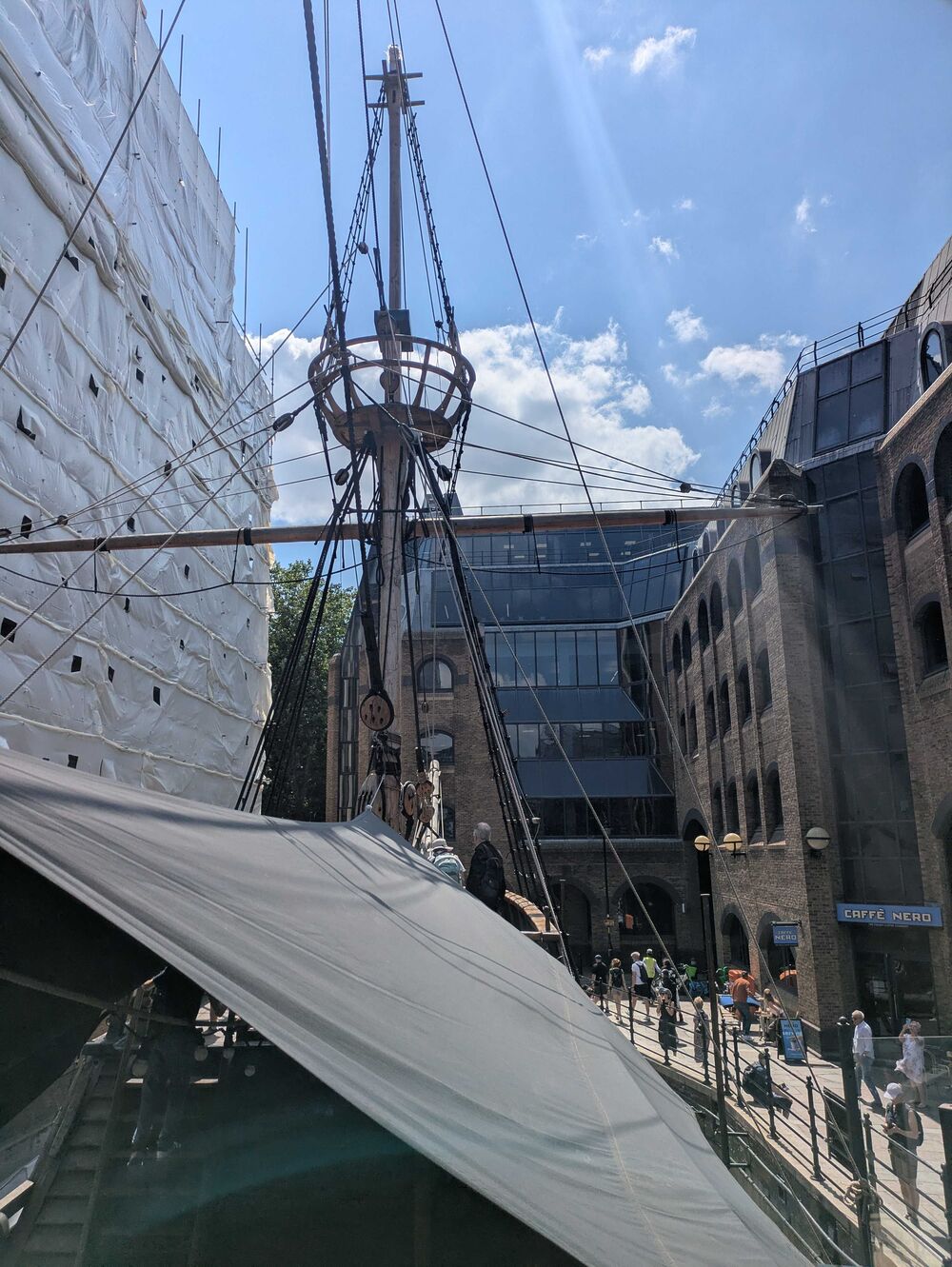
View from the Poop Deck of the Golden Hinde