10.07.26
Conservation Insights
A series exploring the history, significance, and technical care of historic buildings, sharing the challenges and solutions that preserve architectural heritage for the future.
02. Laurie Groves Baths: Looking After the Roof That Protects a Century of Social History
For generations of south Londoners, Laurie Grove Baths was far more than a municipal swimming pool. Opened in 1898 under the Public Baths and Wash-houses Act of 1846, the Grade II listed building was conceived as an investment in public health, providing swimming pools, slipper baths and laundries for a rapidly expanding industrial community. At a time when many households lacked bathrooms of their own, it offered something we now take for granted: the opportunity to wash, swim and maintain personal dignity.
Designed by local architect Thomas Dinwiddy in a confident Jacobean style, the building has continually adapted to changing needs. Its pools have hosted dances and concerts, welcomed the Anglo-Caribbean Association during a period when many venues excluded Black Londoners, and today provide studio space for students at Goldsmiths, University of London. Few civic buildings encapsulate so much of London’s social history within a single structure.
Yet, while the richly detailed façades attract attention, it was the roof that presented the greatest conservation challenge.
The Conservation Challenge
Historic roofs rarely fail because of one dramatic event. More often, deterioration begins gradually through blocked gutters, slipped slates, failed flashings and areas that are simply too difficult to inspect safely.
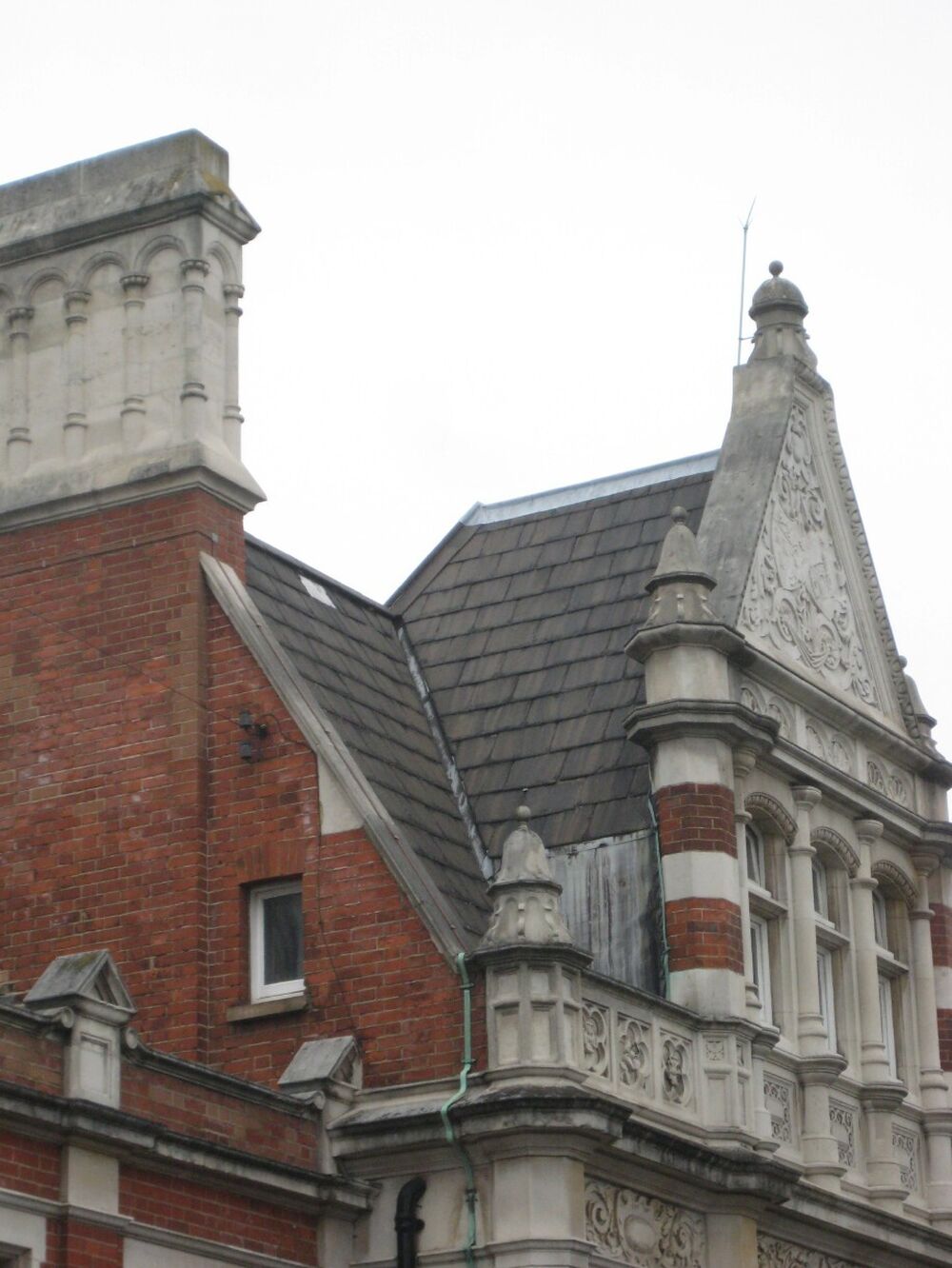
Laurie Grove Baths is no exception. Behind the prominent street elevations lies an intricate roofscape of pitched slate roofs, glazed lanterns, patent glazing, lead valleys, parapet gutters and concealed drainage channels. Over more than a century, routine maintenance had become increasingly difficult, leaving vulnerable areas inaccessible and allowing small defects to develop into larger maintenance issues.
Rather than focusing solely on repairing individual defects, our approach considered how the building could be better cared for over the decades to come.
Our Approach
The project combined urgent fabric repairs with carefully considered improvements that would support the building’s long-term maintenance while respecting its listed status.
Works included repairs to slate roofs, leadwork, asphalt coverings, roof lanterns, patent glazing and rainwater drainage systems, alongside the repair of defective flashings, blocked outlets and weathered detailing. Existing dormers were re-clad using traditional lead detailing more appropriate to the character of the building, while improving thermal performance.
Perhaps less obvious, but equally important, was the introduction of permanent maintenance infrastructure. New access ladders, roof walkways and discreet fall protection systems were designed to allow future inspection and cleaning of gutters, valleys and rooflights without risking damage to fragile historic fabric or compromising the building’s appearance. Located away from public views and finished in dark colours to minimise their visual impact, these interventions demonstrate how contemporary requirements can be integrated sensitively into historic buildings.
Like many successful conservation projects, much of the work is almost invisible to visitors. That is often the measure of success: preserving historic character while quietly improving performance, safety and longevity.
Lessons from the Project
One of the enduring challenges of conserving historic buildings is recognising that maintenance is itself a form of conservation.
A well-designed maintenance strategy can prevent the need for far more extensive interventions in the future. By improving access, simplifying routine inspection and addressing the causes of water ingress rather than simply its symptoms, projects such as Laurie Grove Baths help ensure significant buildings remain both usable and resilient.
For us, conservation is rarely about freezing a building in time. It is about understanding how it works, respecting its significance and making thoughtful interventions that allow it to continue serving new generations. Laurie Grove Baths has already lived many lives; as a public bathhouse, community venue and university building. Sensitive conservation helps ensure it is ready for whatever its next chapter may be.
Conservation Insight
Historic buildings rarely deteriorate because of a single failure. More often, defects begin with routine maintenance issues: blocked gutters, slipped slates or failed flashings. Designing buildings so they can be safely inspected and maintained is one of the most effective forms of long-term conservation.