09.03.26

Conservation Insights
A series exploring the history, significance, and technical care of historic buildings, sharing the challenges and solutions that preserve architectural heritage for the future.

01. Tollgate House, Hampstead Heath: Preserving an 18th-Century Landmark

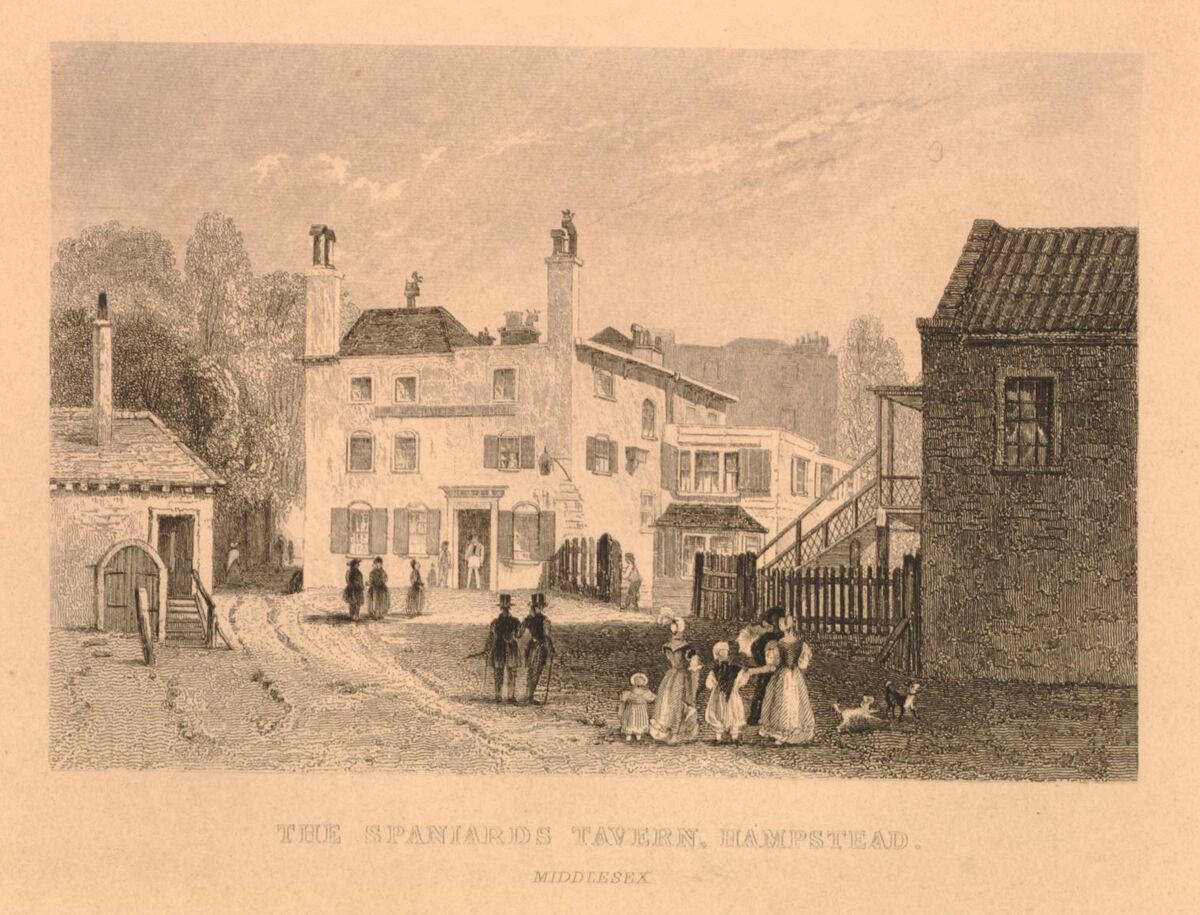
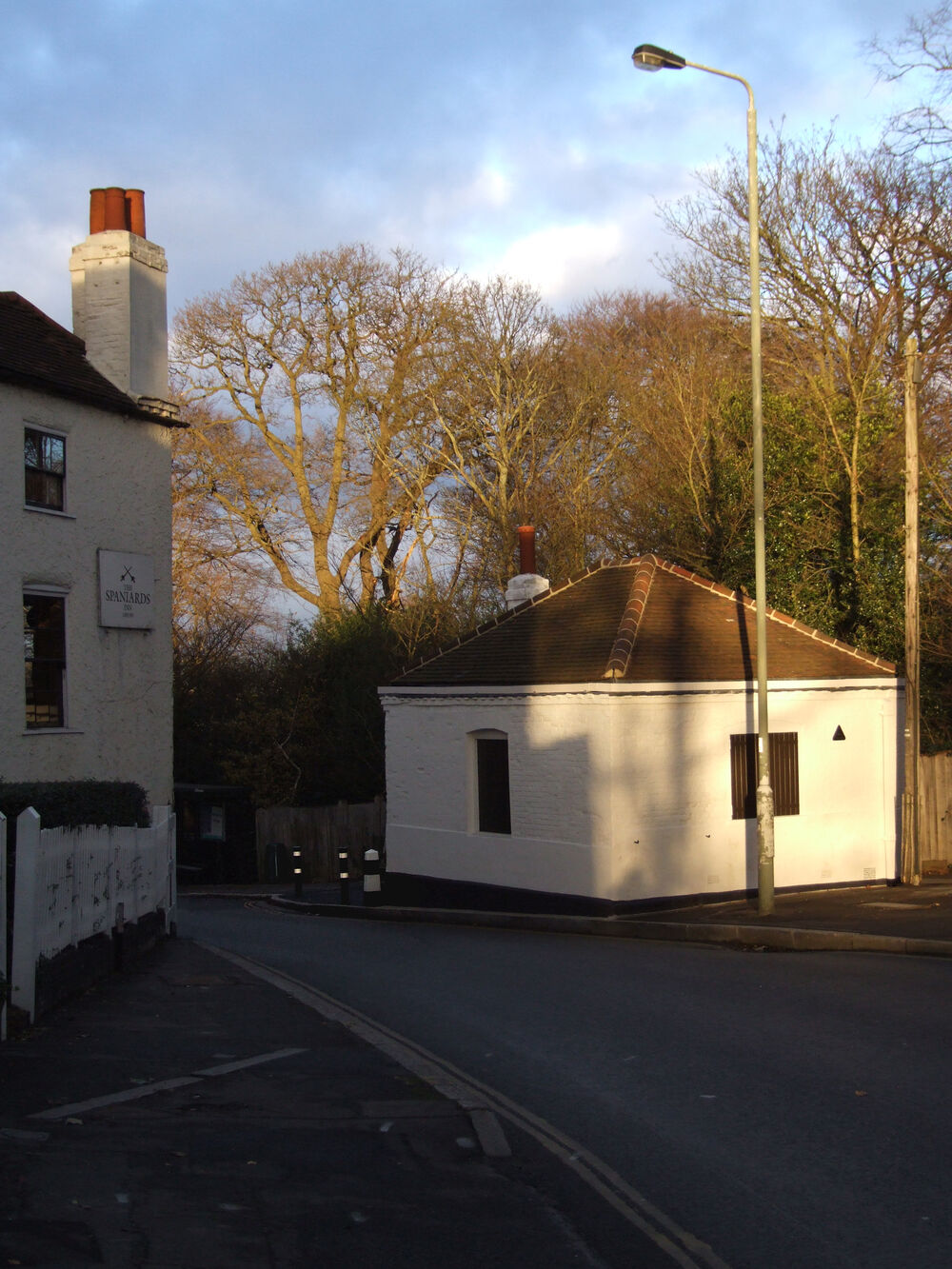
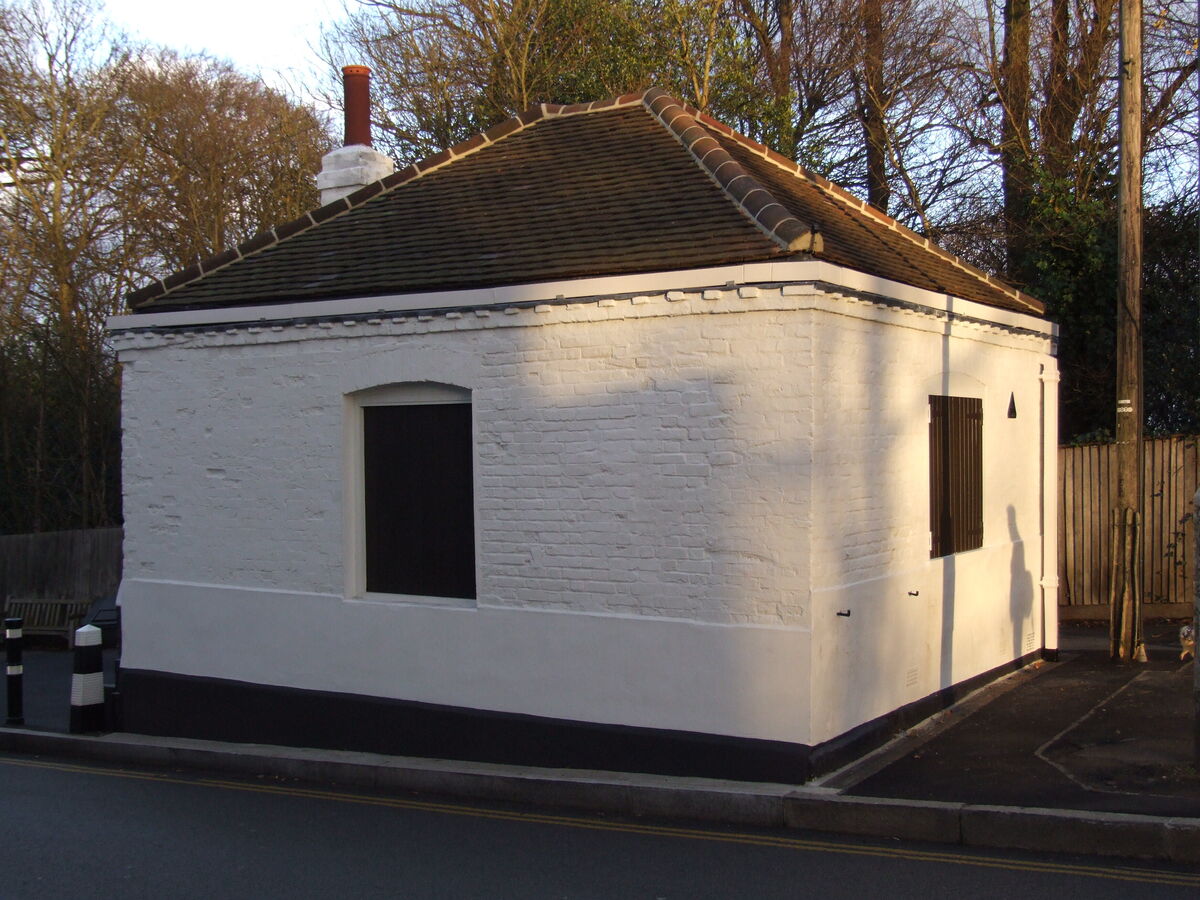
On the eastern edge of Hampstead Heath, opposite the iconic Spaniards Inn, stands a small square building that quietly marks a piece of London’s transport history. The Tollgate House, a late 18th-century Grade II listed building, was originally the gatehouse where travelers paid tolls to enter land owned by the Bishops of London. Its painted brick walls, brick dental course, and ceramic tile hipped roof, along with a vaulted lower ground floor, reflect its age and functional origins.

The building appears on John Rocque’s 1746 map of London alongside the Spaniards Inn, showing a dotted line across the road representing the gate that barred passage until tolls were collected. Travelers heading into the Bishops’ land (from what we now call Hampstead to Highgate) would pass through the toll and immediately find themselves on a better-maintained road. The road to the east widened shortly after the gate, a detail that survives in the road layout today.

A Narrow Road Through Time

Despite the increasing traffic over the centuries, the Tollgate House has remarkably survived. Its location at a narrow bend opposite the inn has made it the focus of multiple proposals for removal, dating back to a 1922 report in the Hampstead and St John’s Wood Advertiser. Later, in 1961, the London County Council proposed demolition to improve traffic flow, and the debate even reached the House of Lords in 1966, when Lord Colwyn questioned whether the gate should be removed to ease congestion. Ultimately, the toll gate survived, and in 1974 it was granted Grade II listing, securing its protection under the care of Camden Council. A commemorative plaque now marks its historical significance, and a black-and-white bollard installed in 2008 protects the building from passing traffic.

Our Conservation Approach

By the time we were commissioned, the Tollgate House was unoccupied, unserviced, and suffering from significant damage. The number of vehicles passing had caused deterioration to the high-level brickwork, rainwater goods, and roof, allowing water ingress and fabric decay. Our work focused on returning the building to a weather-tight, structurally consolidated state, while respecting its historic character:

External Repairs: Brickwork repairs, repointing, and decoration of all elevations and chimney.

Roof and Rainwater Management: Structural consolidation of damaged roof areas, replacement of roof tiles to match existing, and a more robust gutter and downpipe system designed to withstand potential vehicle impacts.

Internal Conservation: Repointing and crack repairs to internal brickwork, including the vaulted basement ceiling and floors, and repair of timber doors, windows, and shutters. Low-level snorkel vents improve natural ventilation to aid drying of historic fabric.

Drainage Improvements: Installation of perimeter channels to manage groundwater ingress.

The majority of the work was like-for-like repair, with sensitive upgrades to ventilation and drainage ensuring durability while preserving the building’s historic character.

Impact and Legacy

The project achieved more than structural consolidation. By returning the building to a weather-tight state and improving internal conditions, the Tollgate House was removed from the Heritage at Risk register and Camden Council was able to let the building commercially; helping to ensure its continued use and preservation.

Tollgate House reminds us that heritage conservation is not just about preserving bricks and mortar; it’s about protecting stories, patterns of daily life, and landmarks that have shaped the way Londoners move through the city for centuries.

Spaniards Inn 8

© The Trustees of the British Museum

Spaniards Inn 3 Scaled

Tollgate House and Spaniards Inn c. 2008

Spaniards Inn 4 Scaled

Tollgate House c. 2008 showing decline and damage

Tgh Spaniards N3

Tollgate House and Spaniards Inn after completion of the works

Tgh Spaniards

Tollgate House and Spaniards Inn after completion of the works

Tgh

Tollgate House showing result of repair and restoration works

Tgh Detail

Close-up of the Tollgate House, showing restored brickwork; repaired shutters; and, renewed decorations, roofing and rainwater goods

04.03.24

David Johnson, as a part of his ongoing work with the Organization of World Heritage Cities (OWHC), recently had the opportunity to travel to George Town, Malaysia for the ‘We Are Site Managers’ conference, where he was a key note speaker for Session 13: ‘Resources for Site Managers: Disaster Risk Preparedness and Dealing With Emergencies’. He introduced attendees to the ‘Emergency Programme’ developed by OWHC which aims to assist member cities and their site managers to identify risks, explore methods on natural and man-made disaster prevention and longer term management with a view to protect heritage sites worldwide.

Img 8206
Img 8208

30.08.23

We recently presented our proposal for the transformation of the Nautical Museum in Castletown on the Isle of Man to the Tynwald and various stakeholder engagement days. Interviews with Project Lead, Jon Parry, together with our animated walkthrough can be found here and here

The project combines conservation and repair of the entire historic Nautical Museum site with an architecturally distinct, sustainable and sympathetic design for a new-build display boathouse for the historic ship, The Peggy. The completed project will transform access & interpretation, combining historic collections, vibrant new interactives and displays to provide a world class, all weather attraction for Castletown, offering engaging and enjoyable experiences that will embrace and inspire visitors of all ages and abilities.

The proposal combines the highest standards of conservation and adaptation of existing historic buildings together with innovative and accessible approaches to exhibition design, visitor interaction, understanding and enjoyment.

Dannatt Johnson Architects lead a design team including Steensen Varming and AECOM, with Project Management from Fraser Randall. This team delivered our recent award-winning collaboration at the Imperial War Museum Second World War and Holocaust Galleries. Exhibition Designers Real Studios have also worked along side us, following our previous work together for the National Museum of the Royal Navy.

We are proud to be working with Manx National Heritage on this prestigious and significant site, and look forward to the exciting possibilities and opportunities that this complex and transformational project will provide. The project is currently on hiatus, while funding applications and fundraising activities are undertaken. In the meantime, we are pleased to share some of our team’s concept images for the project, presented to the Tynwald and stakeholders in recent days.

Street Elevation
Quarterdeck Flat
Street Oblique
Dock View Flat
Castle Render Flat

01.08.23

We recently enjoyed a tour of The Palace of Westminster (Houses of Parliament), kindly escorted by our ex-colleague who, having worked at DJA on projects including at Chiswick House and Dover Castle, is now involved in Strategic Estates at the Palace. It was a wonderful opportunity to hear about the large projects undertaken and overseen by her team, such as the recent refurbishment of the Elizabeth Tower; and the history of the site, as well as appreciating the variety of architectural details throughout.

Hop

07.02.23

DJA are proud to be one of 200 businesses taking part in the Mayor of London’s Business Climate Challenge (BCC) 2023. This programme is funded by the Mayor and works with London businesses to help them prepare for the green transition and future proof their organisation, and help them become net-zero by 2030. By committing to decreasing their energy usage by at least 10 percent a year, we will receive technical support to help us operate more efficiently, reduce energy consumption, and play our part in tackling the climate emergency.

As a practice, sustainability is already at the heart of what we do - adapting existing buildings, rather than building new is one of the greatest contributions we can make within the construction industry. We also strive to reflect this within our workplace: all of our energy is from renewable sources; all staff commute via public transport, on foot or by bike; and we operate a zero-to-landfill initiative. Having access to the support and resources provided through the BCC will push us even further in our commitment to sustainability and protection of the environment.

You can see a full list of participants and learn more about the scheme here.

Business Climate Challenge Web

26.01.23

We are delighted to announce that our recent competitive bid to deliver the transformation of the Nautical Museum in Castletown on the Isle of Man was successful.

The project combines conservation and repair of the entire historic Nautical Museum site with an architecturally distinct, sustainable and sympathetic design for a new-build display boathouse for the historic ship, The Peggy. The completed project will transform access & interpretation, combining historic collections, vibrant new interactives and displays to provide a world class, all weather attraction for Castletown, offering engaging and enjoyable experiences that will embrace and inspire visitors of all ages and abilities.

The proposal combines the highest standards of conservation and adaptation of existing historic buildings together with innovative and accessible approaches to exhibition design, visitor interaction, understanding and enjoyment.

Dannatt Johnson Architects lead a design team including Steensen Varming and AECOM, with Project Management from Fraser Randall. This team delivered our recent award-winning collaboration at the Imperial War Museum Second World War and Holocaust Galleries. Exhibition Designers Real Studios are also joining us following our previous work together for the National Museum of the Royal Navy. We also look forward to working alongside Island based architects Horncastle:Thomas and quantity surveying practice Magee & Co.

We are proud to be working with Manx National Heritage on this prestigious and significant site, and look forward to the exciting possibilities and opportunities that this complex and transformational project will provide in developing a new all-weather heritage visitor experience for the island. In the meantime, we are pleased to share some of our team’s concept images for the project which formed part of the tender submission.

Castle View
Dock View Day Test
Street View
Show 5 Home

Credit: RealStudios

17.05.22

We are pleased to announce that our recent galleries project at the Imperial War Museum, London has just been awarded the Museums + Heritage Permanent Exhibition of the Year Award. We are very proud to have been involved with such an important development and to have worked closely with such a well-established and engaged design and client team.

What the judges said:

“An outstanding game-changing, global exhibition, with decolonisation at its forefront. Embracing many difficult stories, juxtaposing them and blowing apart the traditional narrative. The Second World War and the Holocaust Galleries literally and figuratively, bring global and personal stories of humanity and inhumanity, into the light.”

Iwm Mha 2022

Image Credit: Museums + Heritage Awards

04.03.22

Ealing Allotment Partnership: Grow The Universe

After a successful collaboration last year with Ascott Allotments, winning ‘Best Community Allotment 2021’ at RHS Hampton Court, we jumped at the opportunity to get involved again this year.

The team decided to go bigger this year, by involving reps from allotments across Ealing, to share ideas and work together to produce a garden truly representative of the diversity of people and ways of growing found in this West London borough. Ealing Allotment Partnership is a community-led group, working with Ealing Council, on behalf of all allotment tenants in the borough. EAP represents 45 allotment sites and aims to develop community involvement, offer mutual support, raise funds and generally improve all sites within the borough.

The design for 2022 is entitled ‘Grow the Universe’ and incorporates elements which are important to us at this time and are symbolised by the Mandala – a geometric configuration of symbols used in various spiritual traditions as a focus for meditation, a beautiful art form and a living tradition used in everyday life and at important celebrations.

While looking out to the wider universe, the show garden is very much rooted in the allotments of Ealing with most of the plants having been grown by allotmenteers across the borough and materials borrowed and sourced locally. Upholding the values of ‘grow locally’ and ‘involve the community’, all the plants and materials will be re-used after the show in Ealing allotment sites - a truly sustainable garden.

We are very much looking forward to the finished product and wish our allotment friends good weather and good luck for the growing season.

Grow The Universe Masterplan
Grow The Universe Plantingplan
Grow The Universe 3D View

22.12.21

DJA celebrated Christmas together with a visit to the Second World War and Holocaust galleries at the Imperial War Museum. It was a great opportunity for the whole office to experience the spaces out of hours and for those involved with the project to present their work to the team.

We enjoyed a meal at the wonderful Garden Museum, where our tradition of sharing hand-made ‘Secret Santa’ gifts was fulfilled; with a huge variety of individual artistic and creative talent was on display.

From everyone at Dannatt, Johnson Architects we wish you a very happy and healthy Christmas and look forward to seeing what 2022 has in store!

20211214 121242

18.10.21

We were delighted to attend the private opening of two newly completed permanent exhibitions at the Imperial War Museum in London, which will be open to the public from 20th October.

The new Second World War and Holocaust galleries implement phase two of the Foster and Partners masterplan for site, which had commenced with a major refurbishment of the atrium and creation of new First World War galleries at the lower level of this Grade II listed building.

DJA were appointed together with our own sub-consultant team of structural and services engineers AECOM and Steensen Varming and acoustic consultants Sound Space Design to design all of the basebuild works required to create the new spaces for these exhibitions across two levels of the building, working closely over the last 5 years with both teams of exhibition designers and IWM’s curatorial and project leadership.

This BIM Level 2 project involved major structural and services interventions to create nearly 3000 square meters of gallery floor space through a combination of a new floor structure inserted into the former cinema and the interconnection and conversion of existing gallery spaces, back of house storage spaces, conference spaces space and former education spaces. The structural work in the cinema required over a year to complete the necessary demolition and major structural alteration works, and these took place directly beneath the existing Holocaust Gallery on Level 3, and directly above the First World War galleries on Level 0, both of which remained fully open to the public throughout the entire course of the project. The services work also involved provision for complex temporary services works building-wide to ensure that the building could remain open throughout.

The new galleries build upon the high standards for narrative-based museums set by IWM. The Second World War Gallery (Exhibition Designer: Ralph Applelbaum Associates) provides IWM London for the very first time with a complete exhibition exploring the course of the Second World War from its beginnings to its conclusion, detailed in its full global context and importantly, in parallel with the historical course of the holocaust, which at one point is linked with this exhibition through a double height space connecting the two galleries around a single artefact linked to both narratives. The look and feel of this gallery connects directly to the First World War gallery on the level below, but there is a much greater emphasis within the new exhibition towards connecting artefacts to the personal stories of individuals experiencing all aspects of a global conflict that was of unprecedented scale in all of human history.

The Holocaust Gallery (Exhibition Designer: Casson Mann) sets out the course of the history of the Holocaust from the 1930’s to beyond the Nurembourg trials, ending with an exhibition of survivor testimonies. This new exhibition, informed by the vast amount of new scholarship and study that has taken place since the creation of the previous exhibition, is brightly lit and created as a set of overlapping spaces in shades of blue. This, together with the use of compelling video pieces showing the sites of atrocities as they are today in their natural beauty makes the point that these events did not happen in the shadows. There are personal stories both of victims and, importantly, perpetrators ranging from the familiar to the great many unknown and often unremarkable individuals who became the instruments of this Nazi programme of unspeakable horror.

If you’d like a preview of the exhibition, IWM have released a short video which can be seen here: https://www.iwm.org.uk/preview-of-new-second-world-war-and-the-holocaust-galleries

Iwm 10
Iwm 3
Iwm 5
Iwm 6
Iwm 7
Iwm 8
Iwm 9